How Does Acadian Support the SDGs?
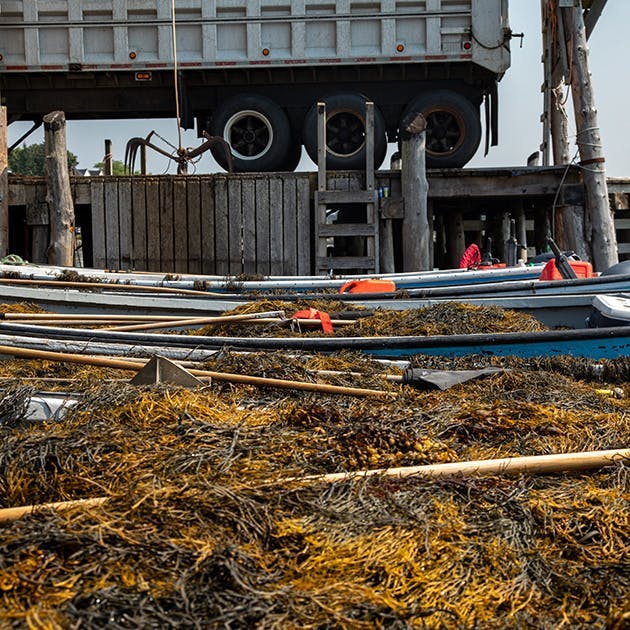
Acadian recognizes that being a global leader in seaweed harvesting, cultivation, and extraction is a privilege that carries with it great responsibility. Our corporate mission is to provide plants, animals and people with unique renewable sources of essential nutrients and organic compounds. We have endeavoured to deliver this over the past 40 years. We continue to take this seriously from a social mission and a business mission.
To see the full array of Sustainable Development Goals laid out by the UN, visit their website.
Sustainable Goal # 13: Climate Action
Greenhouse gas emissions from agriculture continue to increase, further contributing to climate variability and unpredictable weather patterns.
The agriculture industry is one that can reverse climate change and Acadian’s technology is a fundamental piece in this new era of sustainable agriculture.
Here’s how we’re contributing to SDG goal 13: Climate Action:
- For every tonne of Ascophyllum nodosum seaweed we harvest, 362 kg of CO2 is captured. The seaweed then regrows and we are able to absorb this C02 again on a continuous cycle, annually
- This captured carbon is then transferred into our seaweed extracts and applied to crops via seed, soil and foliage
- Application of extracts has shown to increase the root biomass of plants
- Increased root biomass increases soil organic matter that feeds the soil microbiome and creates ‘living soil’ - the core of regenerative agriculture
- Living soil improves plant health
- Increased plant health increases photosynthesis – removing more atmospheric carbon
A virtuous cycle that contributes to regenerative agriculture by increasing soil organic matter and contributes to climate-smart agriculture by reducing atmospheric carbon.
Goal # 14: Life Below Water
70% of the earth’s surface is covered by water, and protecting this precious resource is crucial to our very existence. This includes protecting seaweed. That’s why we have a team (Resource Management team) dedicated to protecting and measuring the biomass and the impact on the marine ecosystem in the areas we harvest from. We do this to ensure a healthy habitat for the animals and other marine plants, and to keep our seaweed resource sustainable in the long-term. All of which helps to achieve the UN’s Sustainable Development Goal number 14: Life Below Water.
Goal # 15: Life on Land
Soil degradation has impacted 40% of land globally and the FAO predicts 90% of the earth’s precious topsoil is likely to be at risk by 2050. For the past forty years, the most powerful way to reverse global warming has been largely overlooked. Agriculture and regenerative practices are a compelling solution to reverse global warming.
Regenerative agriculture holds the potential to significantly cut the industry’s emissions, by improving soil health and consequently contributing to a more resilient food system.
Adding Acadian biostimulant solutions to crop care inputs can help transition to regenerative agriculture methods without sacrificing productivity or yield in a cost-effective way. Improving soil fertility and soil health, both of which are foundational to any regenerative and sustainable agri-food system.
Related Pages

Climate
Visit Page